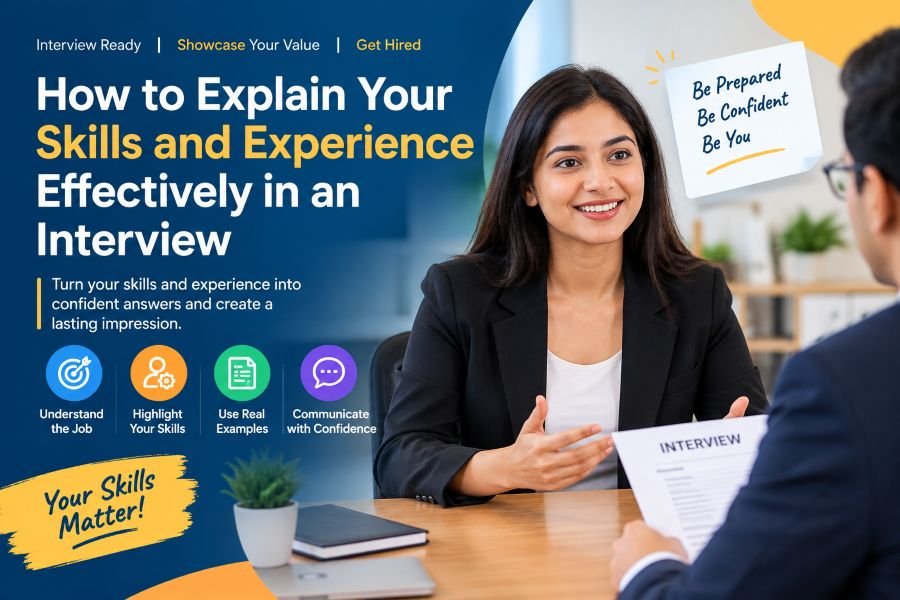
How to Explain Your Skills and Experience Effectively in an Interview
A job interview is your chance to show an employer more than what's written on your resume. While your qualifications and work history may help you get shortlisted the way you explain your skills and experience in an interview can really affect the hiring decision.
Many people find it hard when interviewers ask questions like "Tell me about yourself " "What are your key skills?" or "Tell me about your experience." Just listing skills is not enough. You need to explain how you have used those skills what responsibilities you had and what results you got.
In todays job market employers care more about practical skills, communication being able to adapt, solving problems and showing real achievements. A clear and well-organized answer can help you show your value with confidence.
Understand the Job Before Explaining Your Skills
Before going to an interview read the job description. Find out what the main duties, skills, soft skills and qualifications the employer is looking for. Then match these with your background.
For example if a company is hiring a marketing executive and lists SEO, content marketing, analytics and communication skills prepare examples from your past work, internship, school projects or freelance work that show these abilities.
Of saying, "I have good SEO skills " you could say:
"I have worked on SEO campaigns where I did keyword research, optimized website content and watched search performance. I also used analytics and SEO tools to find ways to improve things."
This way your answer is more specific and believable. It shows the interviewer not what you know. Also how you use your knowledge.
Another thing to remember is to not talk about every skill you have. Focus on the ones that matter most for the job. Matching your experience directly to the job makes your answer more meaningful and easier for the interviewer to understand.
Use Real Examples to Demonstrate Your Skills and Experience
One of the ways to talk about your experience is by using real examples. Of making general claims describe a situation where you used a particular skill to solve a problem or reach a goal.
The STAR method. Situation, Task, Action and Result. Can help structure these answers. It encourages people to explain the situation describe what they had to do explain what they did and end with the outcome.
For example if an interviewer asks:
"Tell me about a time when you solved a problem."
A weak answer might be:
"I am good at problem-solving and can handle situations."
A better answer would be:
"In my job our team was behind on an important client project. I had to coordinate tasks and find out where the process was slowing down. I changed the workflow focused on tasks and talked to team members. As a result we finished the work on time. Got positive feedback from the client."
This answer shows problem-solving, communication, teamwork, time management and responsibility without listing those skills.
When talking about your experience focus on what you did. If you were part of a team explain what you personally did of just saying, "We finished the project." Using "I" statements can help the interviewer understand your role.
Whenever you can back up your achievements with numbers. For instance of saying "I increased website traffic " say "I helped increase website traffic by improving content and using the right search terms."

Communicate Your Value With Confidence and Clarity
How you talk about your experience is just as important as what you say. Even someone who is very qualified can miss out if their answers are unclear, long or not related to the question.
Start with an answer and then give a relevant example. Don't use technical words unless they are really needed. Speak naturally. Make sure the interviewer can easily understand what you did.
If you are new to the job market don't think you have nothing to talk about. You can use examples from internships, school projects, certifications, volunteering, freelance work and training. Employers can also see your communication, teamwork, leadership and problem-solving skills from these experiences.
For example a new graduate applying for a marketing job could say:
"During my last year project I worked with a group to create a plan for a business. I researched the target audience came up with content ideas and gave our recommendations. This experience helped me get better at communication, research and working with others."
People with experience should focus on what they achieved and how it made a difference. Of listing past duties explain how your work helped with efficiency, sales, customer satisfaction, project completion or other important results.
It is also important to be honest. Never say you know something you don't. If you don't have experience with a certain technology or process say you have basic knowledge and are ready to learn. Being real can make your answers more trustworthy.
Prepare Answers to Common Interview Questions
Getting ready can make it much easier to talk about your skills and experience confidently. Before the interview get examples for questions like:
Tell me about yourself.
Make a professional introduction covering your education relevant experience, key skills and career goals.
What are your strengths?
Choose two or three strengths that match the job and back them up with examples.
What skills can you bring to this role?
Mention skills that fit the job and explain how you have used them.
Tell me about your experience.
Focus on what you did. Achieved that is relevant to the job.
Tell me about a challenge you faced at work.
Use an example to explain the challenge, your actions and the result.
Why should we hire you?
Link your skills, experience and attitude to what the employer needs.
Practicing these answers can help you avoid going off track and make your responses more focused.. Don't memorize every word. Interviewers usually prefer answers that sound real and natural.
Avoid Mistakes When Discussing Your Experience
Some mistakes can weaken even a strong answer. One is repeating what is on your resume. Your interview is a chance to give details and explain the achievements behind the resume points.
Another mistake is giving answers like "I am hardworking " "I work well with others " or "I have good communication skills" without proof. Whenever you mention a skill try to back it up with a short example.
Talking much is another problem. Keep your answers focused and organized. If the interviewer asks about an experience don't tell your whole career story.
People should also avoid talking about past employers or coworkers. If asked about a situation focus on what you learned how you handled it and how it helped you grow.
Finally don't be afraid to take a pause before answering a hard question. Taking a moment to think can help you give an answer.
Conclusion
Explaining your skills and experience well in an interview is more than listing qualifications. The goal is to show how your skills helped you do tasks solve problems and get results.
Start by understanding the job description find the skills the employer needs. Prepare examples from your experience. Use the STAR method when it makes sense focus on what you did and back up your achievements with numbers whenever possible.
Whether you are new or experienced, confident talking and honest examples can help you make an impression. With practice and good preparation you can turn your skills and experience into strong interview answers and get closer to your dream job.
For job opportunities and career help visit ClickNaukri and keep up with the latest chances for your career.
Frequently Asked Questions (FAQs)
1. How should I explain my skills in an interview?
Choose skills that match the job and explain how you have used them in situations. Back important skills with examples of just listing them.
2. What is the best way to explain work experience in an interview?
Focus on what you did what you achieved and what results you got that are relevant to the job. Use examples and explain your role, in projects or challenges.
3. How can freshers explain their skills without work experience?
Freshers can talk about internships, school projects, certifications, volunteering, freelance work and academic assignments to show technical and soft skills.
4. Should I use the STAR method in an interview?
Yes. The STAR method can help organize answers to experience-based questions into Situation, Task, Action and Result making your answer easier to follow.
5. How can I be more confident when explaining my experience?
Prepare examples before the interview practice answering questions loud and focus on clear short answers. Avoid memorizing answers so your responses feel natural.
Thank you for reading
------------------------------------------------------------------------------------------------------------------------------------------------
Read more blogs: click here
Compare Benefits Plans
Follow on Instagram