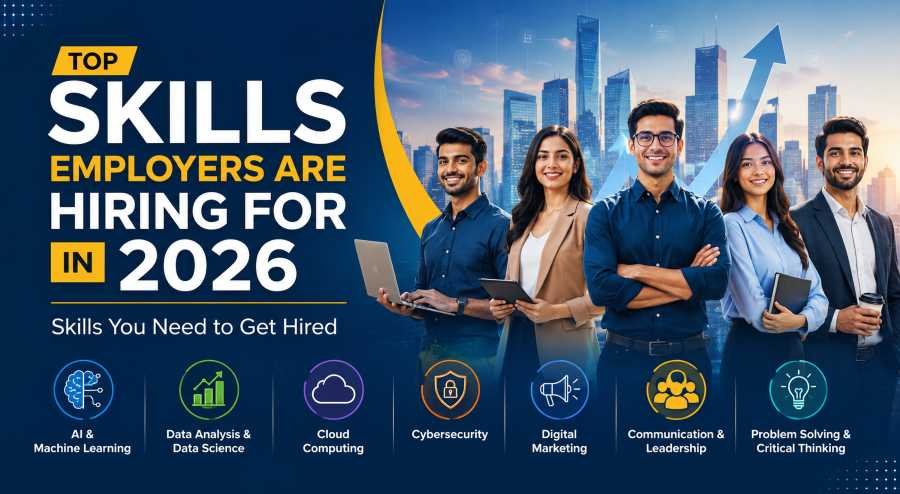
Top Skills Employers Are Hiring for in 2026
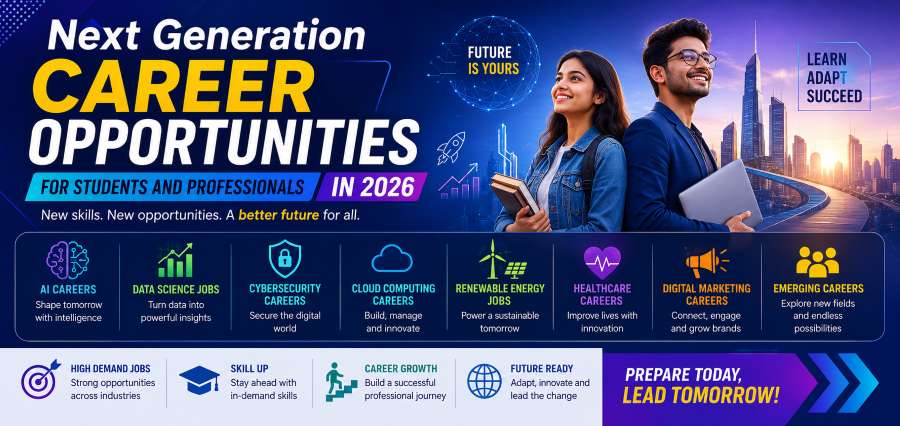
The job market in 2026 is changing faster than ever. Artificial intelligence, automation, cloud computing, cybersecurity, data analytics and digital transformation are reshaping how companies operate and how recruiters evaluate candidates. Today having a degree is valuable. Employers increasingly want candidates who can demonstrate practical skills, adaptability, problem-solving ability and the confidence to work with modern technologies.
Recent 2026 job-market research reinforces this shift. PwCs 2026 AI Jobs Barometer found that jobs requiring AI skills are growing substantially faster than the overall jobs market while employers are placing greater emphasis on judgement, creativity and leadership. In India the NIIT India Skills Gap Report 2026 also identifies AI, cybersecurity, digital and data capabilities as future skills for employability.
For students, freshers, experienced professionals and career switchers understanding the top skills employers are hiring for in 2026 can make it easier to choose the learning path improve a resume and find suitable job opportunities.

Why Skills Matter More in the 2026 Job Market
Recruitment is becoming increasingly skills-focused. Employers want people who can contribute to business objectives than simply list qualifications on a resume. Practical experience, certifications, portfolios, internships, projects and demonstrated knowledge can help candidates stand out.
Technology is also changing existing jobs than simply creating completely new positions. A marketing professional may now need AI and analytics skills while a finance professional may need data visualization and automation knowledge. Similarly software developers are increasingly expected to understand AI-assisted development, cloud platforms, security and modern development frameworks.
This means the competitive professionals in 2026 are often those who combine technical expertise with human skills.
1. Artificial Intelligence and Machine Learning
AI is one of the important skills employers are seeking in 2026. It is no longer limited to AI engineers or research teams. Businesses across marketing, finance, healthcare, education, retail, manufacturing, customer service and technology are adopting AI-powered tools.
Candidates can benefit from learning AI fundamentals machine learning concepts, generative AI, large language models, prompt engineering, AI automation and responsible AI practices.
A 2026 analysis of than 360,000 job postings found AI mentioned in 19.8% of postings ahead of individual skills such as SQL, AWS and Java.
For -technical professionals AI literacy can be equally valuable. Knowing how to use AI tools for research, content creation, data analysis, workflow automation and productivity can improve employability.
2. Data Analytics and Data Literacy
Businesses generate amounts of information every day but raw data has little value unless employees can interpret it and turn it into decisions.
Data analytics is therefore one of the valuable skills for 2026. Employers are looking for professionals who understand data collection, cleaning, analysis, visualization, reporting and business intelligence.
Useful skills include:
Excel and advanced spreadsheets
SQL
Python
Power BI
Tableau
Data visualization
Statistical analysis
Data storytelling
The ability to explain what data means for a business can be especially valuable. Employers increasingly need professionals who can move beyond creating reports and provide insights.
3. Cybersecurity
As organizations become digitally connected, protecting systems, applications, networks and customer information becomes increasingly important.
Cybersecurity professionals can work in areas such as security operations, cloud security, threat detection, vulnerability management, security engineering, risk management and compliance.
AI is also changing cybersecurity. Security teams increasingly need professionals who understand both security practices and AI-related risks. Current industry discussions highlight AI security, cloud security, governance, risk and compliance and security engineering as areas.
For aspiring cybersecurity professionals learning networking Linux, cloud security, SIEM tools, ethical security testing, identity management and security fundamentals can provide a foundation.
4. Cloud Computing
Cloud technology remains fundamental to business infrastructure. Companies continue to rely on platforms such as AWS, Microsoft Azure and Google Cloud for applications, databases, storage, analytics and scalable infrastructure.
Cloud skills can benefit professionals pursuing careers in:
Cloud engineering
DevOps
Software development
Cloud security
Data engineering
System administration
Cloud architecture
Candidates should consider learning fundamentals first and then developing expertise in a major platform. Certifications and hands-on cloud projects can further strengthen a resume.
5. Software Development and Programming
Programming continues to be a career skill even as AI-assisted development becomes more common.
Languages such as Python, Java, JavaScript, SQL and modern web technologies remain relevant across different job roles. A 2026 job-posting analysis found Python, SQL, JavaScript, Java and cloud technologies among requested skills.
However employers increasingly value developers who can solve business problems than simply write code. Understanding software architecture, APIs, databases, Git, testing, cloud deployment and cybersecurity can make candidates more competitive.
6. Automation and AI-Powered Productivity
Automation is becoming a part of everyday business operations. Companies want employees who can identify processes and use digital tools to make workflows faster and more efficient.
Professionals can explore:
Workflow automation
No-code and low-code platforms
AI assistants
Business process automation
API integrations
Robotic process automation
AI-powered productivity tools
The ability to combine domain knowledge with automation can create a career advantage.
7. Digital Marketing and E-Commerce Skills
Digital businesses continue to require professionals who understand how to attract engage and convert customers online.
Important digital marketing skills for 2026 include SEO, paid advertising, social media marketing, content marketing, email marketing, analytics, conversion optimization and AI-assisted content workflows.
E-commerce professionals can also benefit from understanding product listings, marketplace optimization, customer experience, online advertising, CRM and sales analytics.
For job seekers building a portfolio with campaigns SEO projects, social media examples or analytics reports can demonstrate practical capability.
8. Communication Skills
Technical expertise alone does not guarantee career success. Communication remains one of the important skills employers look for across industries.
A 2026 analysis of than 360,000 job postings found communication was the most frequently mentioned skill, appearing in 23.1% of postings.
Strong communication includes:
writing
Professional speaking
Presentation skills
Active listening
Email communication
Client communication
Explaining ideas simply
Candidates who can communicate effectively with colleagues, customers, managers and technical teams can become valuable contributors.
9. Analytical and Problem-Solving Skills
Employers want people who can identify problems evaluate information understand causes and develop solutions.
Analytical thinking is particularly important in technology, finance, operations, consulting, marketing, management and data-related careers.
Of simply showing that you completed a course demonstrate how you used your knowledge to solve a real problem. Projects and case studies can be ways to demonstrate this ability.
10. Leadership and Team Collaboration
Leadership is no longer limited to managers. Companies value employees who can take ownership coordinate with others make decisions and help teams achieve objectives.
Leadership skills include accountability, decision-making, delegation, conflict resolution, mentoring, strategic thinking and stakeholder management.
Collaboration is equally important because modern teams often include people from departments, locations and professional backgrounds.
11. Adaptability and Continuous Learning
Perhaps the future-proof skill in 2026 is the ability to learn continuously.
Technology changes quickly. A tool that is popular today may be. Transformed tomorrow. Professionals who regularly update their skills can remain competitive for longer.
Employers increasingly need people who're comfortable learning new software adopting new workflows experimenting with technology and adapting to changing business requirements.
Of asking, "Which single skill will guarantee me a job?" candidates should ask, "How can I build a habit of learning valuable skills throughout my career?"
How Job Seekers Can Prepare for 2026
Learning a skill is the first step. Candidates should also demonstrate that skill to employers.
Start by identifying the skills relevant to your target job. Study them through courses, certifications, practical projects, internships, freelance work or personal projects.
Next update your resume with achievements instead of generic statements. For example than writing "Knowledge of digital marketing " demonstrate what you achieved through SEO, advertising, analytics or content campaigns.
Create a portfolio where appropriate. Developers can showcase projects on GitHub designers can create portfolios marketers can present campaign results and data professionals can demonstrate dashboards and analysis projects.
Finally customize your resume for each position and use keywords from the job description. Regularly explore opportunities through trusted job-search platforms such as ClickNaukri.

The Future of Hiring: Skills + Technology + Human Strengths
The career lesson of 2026 is that technology and human skills are becoming more connected. AI may automate tasks but employers still need people who can exercise judgement communicate clearly solve problems lead teams and understand business objectives.
PwCs 2026 research highlights this combination finding that AI-exposed roles increasingly emphasize human capabilities such as judgement, creativity and leadership.
Therefore the strongest candidates are not necessarily those who know the technologies. They are professionals who can combine technology with business knowledge and human judgement.
Conclusion
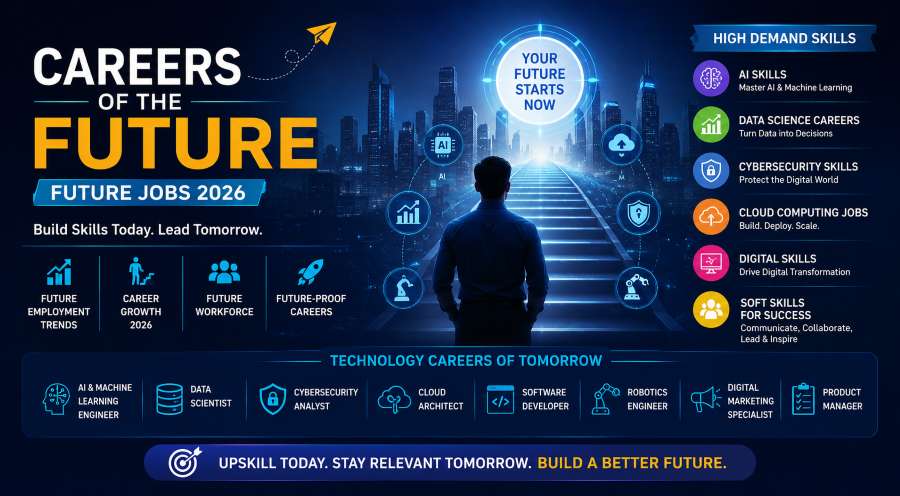
The top skills employers are hiring for in 2026 include intelligence, machine learning, data analytics, cybersecurity, cloud computing, software development, automation, digital marketing, communication, analytical thinking, leadership, collaboration and adaptability.
The job market is moving toward skills-based hiring making continuous learning more important than ever. Whether you are a looking, for your first job, an experienced professional planning a career change or a student preparing for the future investing in relevant skills can significantly improve your employability.
Start with one skill that matches your career goal build experience showcase your achievements and continue learning. With the combination of technical expertise and human skills you can position yourself for better career opportunities in 2026 and beyond.
Frequently Asked Questions
1. What are the top skills employers are hiring for in 2026?
The valuable skills include AI and machine learning, data analytics, cybersecurity, cloud computing, software development, automation, communication, analytical thinking, leadership, digital marketing and adaptability.
2. Is AI a skill for jobs in 2026?
AI knowledge is increasingly useful across industries. Not every professional needs to become an AI engineer. Understanding how AI tools work and how they can be applied to a particular profession can improve employability.
3. Which skills should freshers learn in 2026?
Freshers can consider learning Python, SQL, AI fundamentals, data analytics, cloud computing, cybersecurity, web development, automation or digital marketing depending on their career interests.
4. Are skills still important, in 2026?
Yes. Communication, collaboration, leadership, adaptability, creativity, judgement and problem-solving remain highly valuable. Current job-market research shows communication continues to be one of the frequently requested skills.
5. How can I improve my chances of getting hired in 2026?
Identify the skills required for your target role develop experience earn relevant certifications create a strong portfolio customize your resume improve interview skills and consistently apply for suitable opportunities through reliable job platforms.
Thank you for reading 🙂
Campaigns & Elections
------------------------------------------------------------------------------------------------------------------------------------------------
Jobs
Career Resources & Planning
Engineering & Technology
Read more blogs: click here
Follow on Instagram