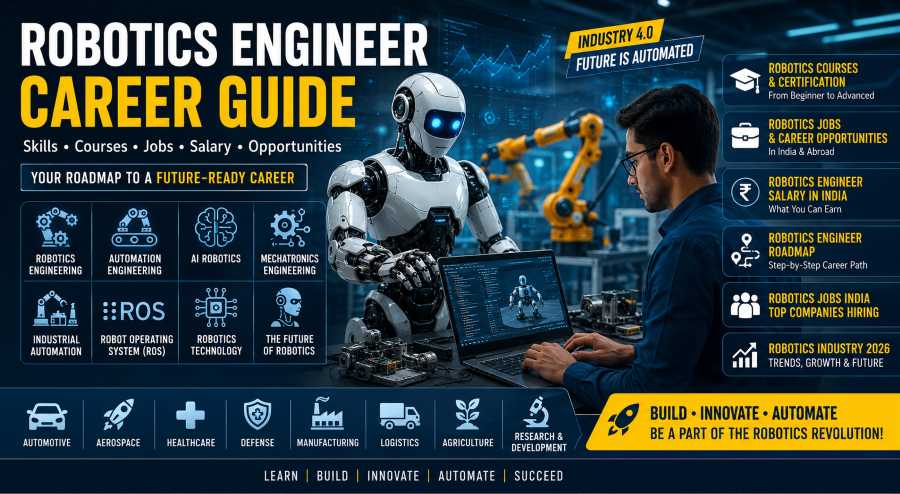
Robotics Engineer Career Guide Skills Courses and Opportunities
Robotics engineering is a rapidly growing field. Many industries are using automation, artificial intelligence and smart machines. This means that the demand for robotics engineers is increasing. Robotics engineers are working in areas such as manufacturing, healthcare, agriculture, and space exploration. They are creating technologies that will shape the future.
If you are interested in designing robots or working with automated systems, this guide will help you. You will learn about the skills you need, the courses you can take, and the career opportunities available. You will also learn about the salary you can expect and the future of robotics engineering.

What is Robotics Engineering?
Robotics engineering is a field that combines engineering, electronics, computer science, artificial intelligence and automation. Robotics engineers design, build and maintain robots. These robots can perform tasks automatically or semi-automatically with minimal human intervention.
You can find robots in places like:
* Manufacturing industries
* Hospitals
* Warehouses
* Agriculture
* Defense
* Space missions
* vehicles
* Smart homes
As automation becomes more common, robotics engineers are needed in almost every sector.
What Does a Robotics Engineer Do?
A robotics engineer has responsibilities. These include:
* Designing systems
* Developing automation software
* Programming robots
* Testing robotic equipment
* Troubleshooting system issues
* Integrating intelligence and machine learning algorithms
* Developing sensors and control systems
* Improving manufacturing automation
* Collaborating with engineers from disciplines
* Maintaining systems for optimal performance
Robotics engineers work on many types of robots like industrial robots, drones, autonomous vehicles, medical robots, service robots and research-based robotic systems.
Skills Required to Become a Robotics Engineer
To become a robotics engineer, you need to have both technical and soft skills.
Technical skills include:
* Programming languages like Python, C++, Java, MATLAB and ROS
* Design and understanding of mechanical components
* Electronics and understanding of microcontrollers, sensors and embedded systems
* Artificial intelligence and machine learning
* Mathematics and understanding of linear algebra, calculus, probability and geometry
* Control systems and understanding of how robots maintain balance, movement and precision
Soft skills include:
* Problem-solving
* Critical thinking
* Communication
* Teamwork
* Creativity
* Project management
* Time management
* Analytical thinking
Educational Qualification
You can start your career in robotics after completing Class 12. You can pursue a diploma or degree in robotics, mechanical engineering, electronics or computer science.
Best Robotics Courses to Learn
Apart from degree programs, you can also take certification courses to enhance your skills. Popular learning areas include:
* Robot Operating System (ROS)
* intelligence
* Embedded systems
* Machine learning
* Computer vision
* Industrial automation
* PLC programming
* Internet of Things (IoT)
* Arduino programming
* Raspberry Pi development
Career Opportunities in Robotics Engineering
Robotics engineers have excellent career opportunities in India and abroad. Popular job roles include:
* Robotics engineer
* Automation engineer
* AI engineer
* Embedded systems engineer
* Robotics software developer
* Control systems engineer
* Computer vision engineer
* Research scientist
* Robotics technician
* Mechatronics engineer
Industries Hiring Robotics Engineers
Robotics professionals work in industries like:
* Automobile manufacturing
* Aerospace
* Healthcare
* Defense
* Logistics
* Warehousing
* Agriculture
* Consumer electronics
* Construction
* Mining
* Marine engineering
* manufacturing
* Renewable energy
* Research organizations
Top Companies Hiring Robotics Engineers
Leading employers include:
* ABB
* Siemens
* Bosch
* Tata Motors
* Mahindra
* Tesla
* Amazon Robotics
* NVIDIA
* Intel
* Fanuc
* KUKA Robotics
* ISRO
* DRDO
* Microsoft
Robotics Engineer Salary in India
The salary of a robotics engineer depends on education, skills, location and experience. Approximate salary ranges are:
* Fresher: ₹4–8 LPA
* 2–5 years: ₹8–15 LPA
* years: ₹15–30 LPA
* Senior robotics engineer: ₹30–50+ LPA
Future Scope of Robotics Engineering
The future of robotics engineering is very promising. Emerging technologies include:
* Humanoid robots
* vehicles
* Surgical robots
* Delivery robots
* Agricultural robots
* AI-powered assistants
* Warehouse automation
* Industrial automation
* Smart factories
* Space robotics
How to Start a Career in Robotics Engineering
To start a career in robotics engineering, follow these steps:
1. Complete Class 12 with Physics, Chemistry and Mathematics.
2. Pursue a Bachelor's degree in Robotics, Mechanical, Electronics or Computer Science.
3. Learn Python, C++ and Robot Operating System (ROS).
4. Build robotics projects using Arduino and Raspberry Pi.
5. Participate in robotics competitions and hackathons.
6. Complete internships in robotics companies.
7. Earn certifications in AI, automation and embedded systems.
8. Develop a portfolio showcasing practical projects.
9. Apply for entry-level robotics engineering roles.
10. Continue learning emerging technologies to stay competitive.

Benefits of Becoming a Robotics Engineer
The benefits of becoming a robotics engineer include:
* paying career
* Strong job demand
* Opportunities
* Learning
* Work with advanced technologies
* Excellent research opportunities
* industry applications
* Career growth in AI and automation
* Ability to solve real-world problems
* Long-term career stability
Challenges in Robotics Engineering
While robotics engineering is a career, it also comes with challenges like:
* Rapid technological changes
* Continuous skill upgrades
* Complex programming
* High project costs
* Multi-disciplinary learning requirements
* testing and debugging
However, these challenges also make the profession intellectually stimulating and highly rewarding.
Conclusion
Robotics engineering is an exciting and future-ready career option for students who are passionate about technology, innovation and automation. With advancements in intelligence, machine learning, IoT and smart manufacturing, robotics engineers are driving the next wave of industrial transformation. By acquiring the educational qualifications, technical expertise and hands-on project experience, aspiring professionals can build successful careers in robotics across industries worldwide.
Frequently Asked Questions (FAQs)
1. Is robotics engineering a career in India?
Yes, robotics engineering offers career opportunities due to increasing automation, AI adoption and Industry 4.0 initiatives across manufacturing, healthcare, logistics and research sectors.
2. Which programming languages should a robotics engineer learn?
Python, C++, Java, MATLAB and Robot Operating System (ROS) are among the commonly used programming languages and platforms in robotics.
3. What qualifications are required to become a robotics engineer?
Most robotics engineers complete a B.Tech or B.E. In Robotics Engineering, Mechanical Engineering, Electronics, Mechatronics, Computer Science or related disciplines. Advanced roles may require an M.Tech or PhD.
4. What is the average salary of a robotics engineer?
Freshers typically earn ₹4–8 LPA in India. Experienced professionals can earn ₹15–30 LPA or more depending on expertise, company and specialization.
5. What industries hire robotics engineers?
Robotics engineers are employed in manufacturing, automotive, aerospace, healthcare, defence, logistics, agriculture, consumer electronics, research organisations, and AI-driven technology companies.
Thank you for reading 🙂
------------------------------------------------------------------------------------------------------------------
Read more blog click here
Follow us on Instagram
Digital Currencies
If you want to build your website at an affordable price, then click here