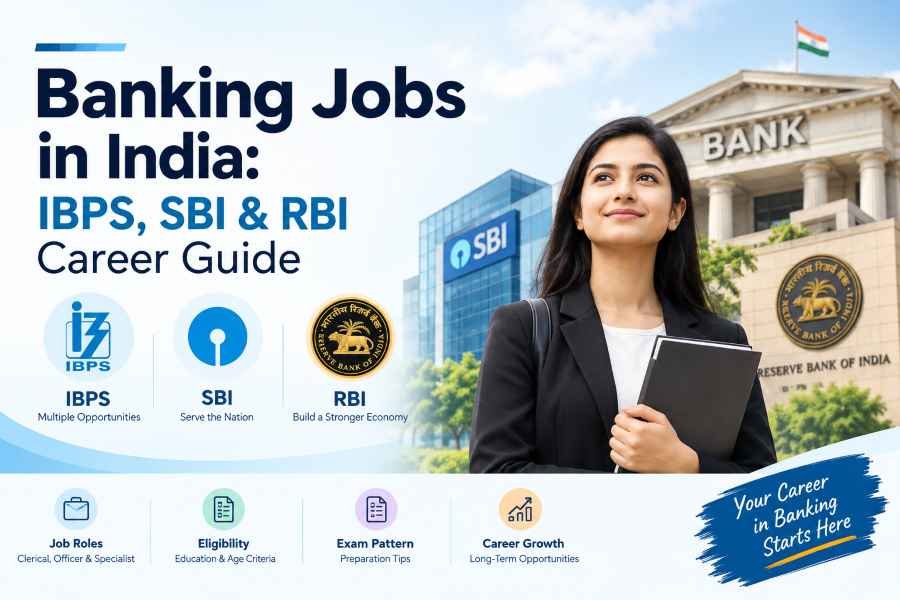
Banking Jobs in India IBPS SBI and RBI Career Guide
Banking Jobs in India are among the popular career choices for graduates and people who want government jobs. With opportunities in public sector banks the Reserve Bank of India (RBI) and regional rural banks candidates can explore positions that match their education, skills and career goals. From entry‑level positions to officer‑level and specialist roles, Banking Jobs in India offer a wide range of professional opportunities for people across the country.
For aspirants a career in banking means a chance to build professional skills learn about finance and create a long‑term career. Banking Jobs in India give people the chance to grow and succeed.
Public sector banks regularly recruit people for customer service, banking operations, financial management and administrative tasks. These roles are part of Banking Jobs in India.
The Institute of Banking Personnel Selection (IBPS) State Bank of India (SBI) and Reserve Bank of India (RBI) are three institutions that candidates should learn about when looking at Banking Jobs in India.
However preparing for Banking Jobs in India is more than studying for exams. Candidates must know the eligibility rules, exam patterns, application steps and recruitment notices. Knowing the differences between IBPS, SBI and RBI recruitment helps aspirants pick the opportunities and prepare better.
Understanding Banking Jobs in India: IBPS, SBI and RBI Recruitment
Banking Jobs in India include exams and selection processes that test a candidates reasoning, numbers, financial knowledge and professional skills. Although IBPS, SBI and RBI all offer Banking Jobs in India their recruitment methods and job duties are not the same.
The Institute of Banking Personnel Selection runs recruitment for many banks. Its programmes include Probationary Officers (PO) Customer Service Associates (CSA) Specialist Officers (SO) and Regional Rural Bank (RRB) roles. These programmes let eligible candidates apply for Banking Jobs in India. Candidates can see the notifications, eligibility rules, exam dates and application details on the official IBPS website at https://www.ibps.in/.
State Bank of India runs its own exams for positions such as Probationary Officer and Junior Associate. SBI also advertises positions for people with the right qualifications and experience. SBI recruitment is separate from IBPS recruitment so candidates should check the SBI careers portal for new vacancies, exam information and application deadlines.
The Reserve Bank of India provides career chances in central banking, financial regulation, economic research, currency management and admin work. Depending on the notice candidates may find jobs for Grade B officers, assistants and specialists. RBI recruitment rules differ by post. Some posts need specific education or professional skills. Aspirants should visit the official RBI opportunities portal at https://opportunities.rbi.org.in/ for vacancy information.
Every recruitment process has its eligibility rules, selection steps and exam format. Because of this candidates should not assume that the same rules or study plan will fit all Banking Jobs in India exams.
Before applying read the notice carefully. Check the education age limits, any relaxations, application fees, exam dates and selection criteria. This way candidates can find Banking Jobs in India and avoid applying for positions they are not eligible for.
IBPS, SBI and RBI Eligibility, Exams and Preparation Strategy
Knowing the eligibility rules is a must for anyone who wants to apply for Banking Jobs in India. Most graduate Banking Jobs in India need a bachelors degree from an university but the exact rule depends on the job. Specialist Banking Jobs in India may need qualifications in IT, finance, law, economics, agriculture or other fields.
Age limits also differ by exam and role. Some groups of candidates can get age relaxations under the rules. Because eligibility rules change each cycle candidates should always check the official notice before applying.
IBPS exams usually test reasoning, numbers, English and general or financial knowledge depending on the role and exam round. Some Banking Jobs in India may also test computer skills, professional knowledge or other areas. Depending on the process candidates may have to pass a test, a main test, an interview or other steps.
SBI exams follow the pattern described in the notice. For example the Probationary Officer test and the Junior Associate test have selection rules. Officer‑level candidates should also read the notice, for any interview or extra tests that must be done.
RBI examinations may put focus on economic and financial awareness, analytical ability and subject‑specific knowledge depending on the position. Candidates who are preparing for RBI Grade B recruitment should study the syllabus carefully and understand the examination stages before making a study plan. Aspirants who are targeting RBI positions should prepare according to the specific recruitment requirements for those positions.
An effective preparation strategy starts with understanding the syllabus. Candidates should break their preparation into subjects and set a realistic daily timetable. Regular practice in aptitude, reasoning and English can boost speed and accuracy. Reading newspapers and reliable financial news sources helps candidates build awareness of banking developments, monetary policy, economic indicators and government initiatives.
Mock tests and previous‑year question papers are also resources for preparation. They help candidates see the question formats, spot areas and improve time management. After each test candidates should review the incorrect answers and practice similar questions to strengthen understanding.
Consistency is more important than hours of study without a clear plan. A balanced routine that includes concept revision, practice questions, current affairs and mock examinations can help candidates prepare in a way. Candidates should also keep up with application dates admit card releases, examination schedules and result announcements to avoid missing any recruitment stages.
Alongside exam preparation aspirants should develop computer skills, communication abilities and professional awareness. These skills are useful during the selection process. After joining a bank. Candidates who want roles should focus on the technical or professional knowledge that matches their chosen field.
How to Find Banking Vacancies Apply Online and Build a Successful Career

Finding the banking vacancy at the right time is a key part of a successful job search. Candidates should regularly check recruitment websites and keep a record of important notifications, application deadlines, examination dates and eligibility conditions. Checking job portals can also help aspirants discover recruitment updates and organise their job search more efficiently.
ClickNaukri, available at https://www.clicknaukri.com/ can be a resource for candidates looking for employment opportunities and career information. Job seekers can use job portals to find relevant vacancies learn about available career options and stay organised while searching for suitable positions. Candidates should always cross‑check banking recruitment announcements with the website of the recruiting institution before applying.
The online application process usually starts with reading the recruitment notification and confirming eligibility. Candidates should then complete the application form give personal and educational information upload the required documents and photograph and pay the applicable fee if needed. After submitting the form applicants should save the confirmation page and application details for reference.
Aspirants must be especially careful when sharing information online. Applications should be submitted through authorised recruitment portals. Candidates must avoid individuals or websites that promise guaranteed selection in exchange for money because legitimate recruitment depends on the selection process. IBPS, SBI and RBI publish recruitment information through their authorised channels, which should be treated as the sources for verification.
Once candidates start receiving examination notifications keeping a preparation and application calendar can be helpful. Setting reminders for registration deadlines admit card releases, examination dates and result announcements reduces the risk of missing updates. Candidates who are preparing for banking examinations should keep separate records for each application.
Banking careers can offer opportunities for growth in customer service, credit operations, branch management, financial analysis, compliance, technology and administration. The exact responsibilities and career progression depend on the position, institution, performance and applicable service rules. Candidates who have specialised qualifications may also look at roles related to cybersecurity, information systems, data analysis, risk management and financial technology.
Choosing the banking examination depends on personal interests, educational qualifications, strengths and long‑term goals. Candidates who enjoy customer interaction and banking operations may consider customer service positions. Candidates who are interested in leadership and branch operations may explore examinations. Aspirants who are interested in regulation, economic research and central banking may find RBI opportunities more suitable.
The effective approach is to select realistic target examinations understand their requirements prepare consistently and monitor recruitment announcements from trusted sources. With planning and a disciplined preparation routine candidates can improve their readiness for banking recruitment and make well‑informed decisions, about their careers.
Conclusion
Banking jobs in India give a range of career options for graduates and qualified professionals. IBPS recruitment gives access to participating banks and regional rural banks. SBI runs its recruitment for many banking roles. RBI offers jobs in banking and related fields. Every institution has its eligibility rules, exam formats and selection methods.
Candidates need to understand these differences before choosing a test. Should start preparation with a clear study plan. Regular practice revising affairs taking mock tests and submitting applications on time can help make the job search more organised. Following recruitment websites and using reliable job portals like ClickNaukri also helps candidates stay updated on useful banking jobs.
By mixing preparation with careful checking of recruitment notices banking aspirants can take practical steps to achieve banking jobs goals.
Frequently Asked Questions (FAQs)
1. Which banking exams are popular among graduates in India?
IBPS PO, IBPS Customer Service Associate, IBPS RRB, SBI PO, SBI Junior Associate and RBI recruitment exams are choices for banking jobs. The best exam depends on your eligibility, career interests and the latest recruitment notice.
2. What qualification is required for banking jobs in India?
Many graduate-level banking jobs need a bachelor’s degree from a recognised university. However each post has rules and specialist roles may need special qualifications or experience. Candidates should check the notice before applying.
3. What is the difference between IBPS, SBI and RBI recruitment?
IBPS runs recruitment for participating banks and regional rural banks. SBI recruits candidates on its own for banking roles. RBI hires people for jobs in banking, regulation, financial administration and other specialised fields.
4. How can I prepare for IBPS, SBI and RBI examinations?
Start by studying the syllabus and exam format. Practice reasoning, quantitative skills, English and banking or financial awareness. Take tests review often and prepare according to the specific needs of the chosen banking exam.
5. Where can I find banking job notifications in India?
Candidates should visit the IBPS site, SBI careers portal and RBI opportunities portal, for real recruitment notices. ClickNaukri can also be used as a job‑search tool but official recruitment sites must always be used to confirm vacancies and send applications.
Thank you for reading
Search Jobs
Know Worker Rights
Corporate Training
Recruitment & Staffing
Find Recruiters
------------------------------------------------------------------------------------------------------------------------------------------------
Journalism & News Industry
Resumes & Portfolios
Teaching & Classroom Resources
Read more blogs: click here
Compare Benefits Plans
Follow on Instagram